
AI Lace Front Wig Try-On Online
🛡️ Editorial Independence & Transparency Notice: WigMirror is an independent wig decision-advisor platform. Our recommendations are based on construction, styling flexibility, wearing considerations, and available evidence—not on which product pays the highest commission. If you purchase through qualifying links, we may earn an affiliate commission at no additional cost to you.
Quick Decision Answer
A lace front wig try-on can help you decide whether a particular hairline, texture, color, density, or parting style works visually with your face before you spend money. It is especially useful for comparing 13x4, 13x6, HD lace, body wave, straight, and glueless lace front styles side by side.
But virtual try-on is a visual decision aid, not a physical fit test. An AI preview cannot reliably tell you whether a cap will fit securely, whether the lace color will blend under your actual lighting, or whether an installation will remain comfortable throughout a full day.
Quick Selection Matrix
| Your Priority | Best Starting Point | Avoid Starting With | Key Advantage |
|---|---|---|---|
| First lace front wig | 13x4 glueless lace front | Complex adhesive installation | Good balance of front coverage and everyday simplicity |
| Deep middle or side part | 13x6 lace front | Small closure construction | More front-to-back lace for deeper parting |
| Fast everyday routine | Glueless pre-cut lace front | Adhesive-heavy installation | Less installation work |
| Delicate-looking hairline | HD lace | Choosing by the “HD” label alone | Thin lace may reduce visible lace when properly matched |
| Sleek, polished style | HD lace straight | Excessive density | Clean silhouette and easy visual comparison |
| Soft movement | 13x4 body wave | Overly dense construction | Adds movement without requiring an elaborate style |
| Unsure what suits you | Virtual try-on first | Buying from one model photo | Lets you compare several visual directions |
The numbers in 13x4 and 13x6 generally describe the approximate lace dimensions: about 13 inches across the front and roughly 4 or 6 inches of lace depth. A 13x6 therefore provides more front-to-back lace and usually more room for deeper front parting than a 13x4. Exact construction can vary by manufacturer, so always check the product's specifications before buying.
to compare styles before narrowing down the physical specifications.
What Is a Lace Front Wig?
A lace front wig has a sheer lace section along the front of the cap, with hairs attached to the lace to create a more gradual-looking transition between the wig and the wearer's hairline.
That construction is important, but hairline realism is not determined by lace alone. The apparent result also depends on:
Lace color relative to your skin
Hairline shape and placement
Hair density around the front
- Knot visibility
- Parting design
- Cap fit Styling and customization
Lighting and viewing distance
This is why a virtual preview should answer “Do I like this visual direction?” rather than “Will this exact wig look identical in person?”
Why Use a Virtual Lace Front Wig Try-On?
Buying a wig from a model photograph creates several variables you cannot easily control. The model's face shape, hairline, skin tone, lighting, styling, and camera angle may all be different from yours.
A virtual try-on puts the hairstyle into a more relevant visual context.
- Compare Hairline Shapes
A straight, rounded, softly irregular, or more defined hairline can change the overall impression of a wig.
Instead of asking whether the hairline looks natural on someone else, compare how the construction appears around your own forehead and temples.
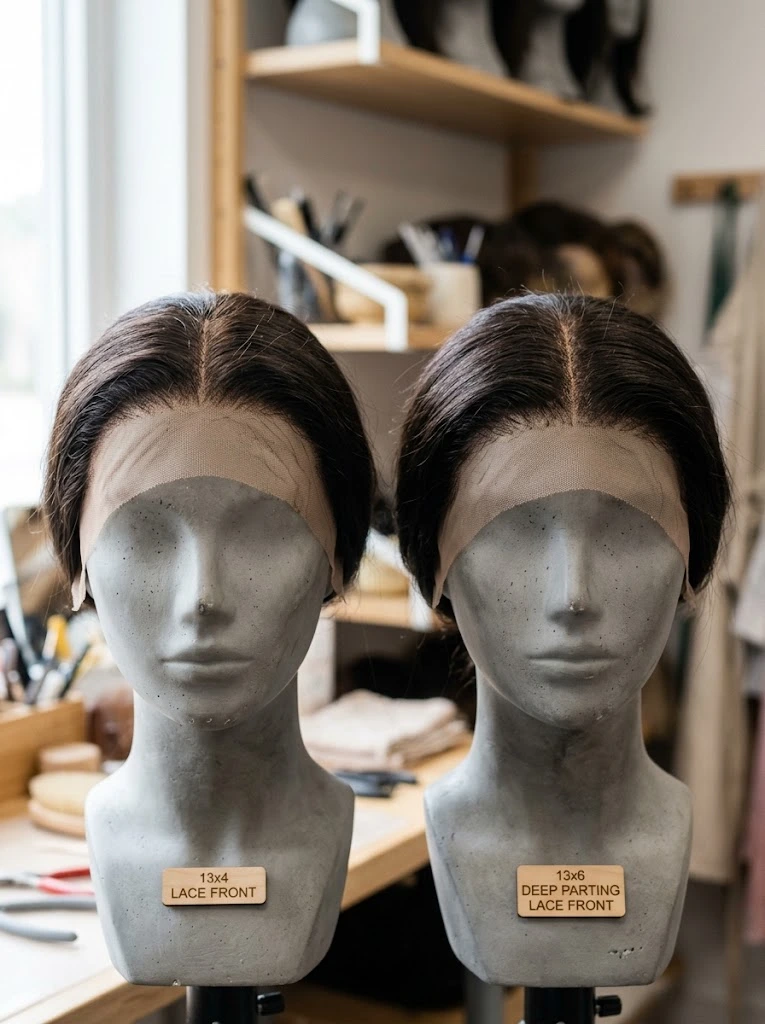
- Compare 13x4 vs. 13x6
The practical difference is the amount of lace depth and, consequently, the available front-parting space.
A 13x4 can be a sensible everyday choice when you mostly wear familiar middle or side parts. A 13x6 becomes more compelling when deeper front parting and greater styling flexibility are important.
- Test Texture Before You Commit
Straight, body wave, loose wave, and curl patterns can change the apparent width, volume, and balance of a hairstyle.
A style that looks attractive in a product listing may feel completely different once its volume sits around your own face.
- Compare Color More Intelligently
Use virtual try-on to narrow down color families, not to treat the result as a laboratory-grade color match.
Compare options such as:
- Natural black
- Soft black
- Dark brown
- Warm brown
- Highlighted blends
- Blonde shades
- Fashion colors Screen displays, lighting, camera processing, and the actual fiber or hair material can all affect how color appears in person.
Popular Lace Front Wig Styles to Try HD Lace Front Straight
Best for: A sleek, polished look with an understated front hairline.
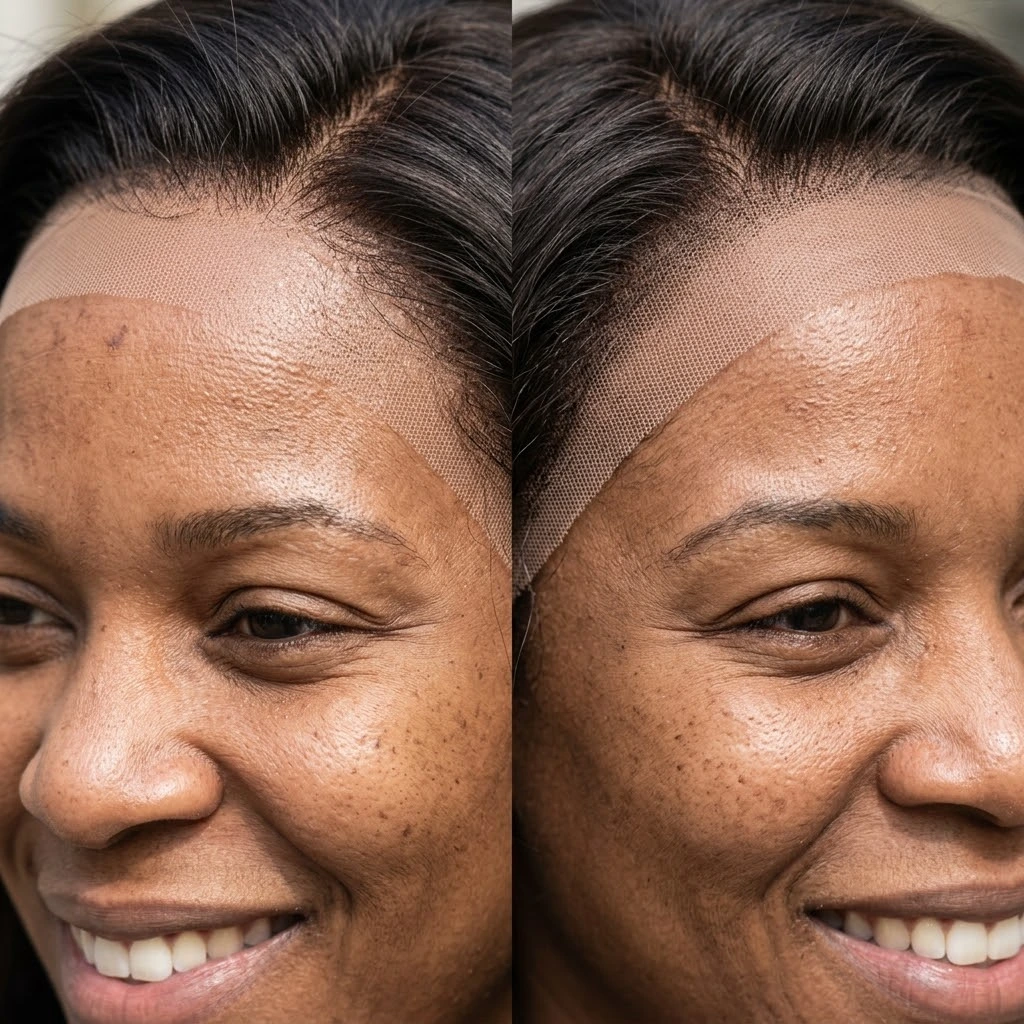
HD lace is typically thinner and more transparent-looking than conventional lace, which can make it visually discreet. But “HD” is not a guarantee of invisibility. Lace tone, placement, hairline density, customization, lighting, and cap fit still matter.
Try this virtually if you want to compare:
Middle-part straight styles
Side-part straight styles
Different front densities
Natural-looking versus highly sculpted hairlines
Decision tip: Do not choose HD lace solely because the product description calls it “invisible.” The construction and how it works with your own features matter just as much.
13x4 Lace Front Body Wave
Best for: Everyday versatility with a natural-looking front and soft movement.
A 13x4 lace front generally provides a practical amount of front lace for common middle- and side-part styles without the additional depth of a 13x6.
Try this virtually if you want to compare:
-
Center parts
-
Side parts Shoulder-length body waves
-
Longer waves Different density levels
Decision tip: If you rarely change your part, additional lace depth may provide flexibility you simply do not use.
13x6 Deep-Parting Lace Front
Best for: Buyers who care about deeper front parting and additional styling flexibility.
A 13x6 extends farther back from the front hairline than a 13x4, giving you more lace area to work with at the front. That does not automatically make it more natural; it simply gives you more construction options.
Try this virtually if you want to compare:
- Deep middle parts
- Deep side parts More exposed front styling
Sleeker pulled-back looks
Decision tip: If your preferred hairstyle always uses the same simple part, you may not benefit enough from the extra lace depth to justify choosing it.
Glueless Pre-Cut Lace Front
Best for: Beginners and buyers who prioritize a faster daily routine.
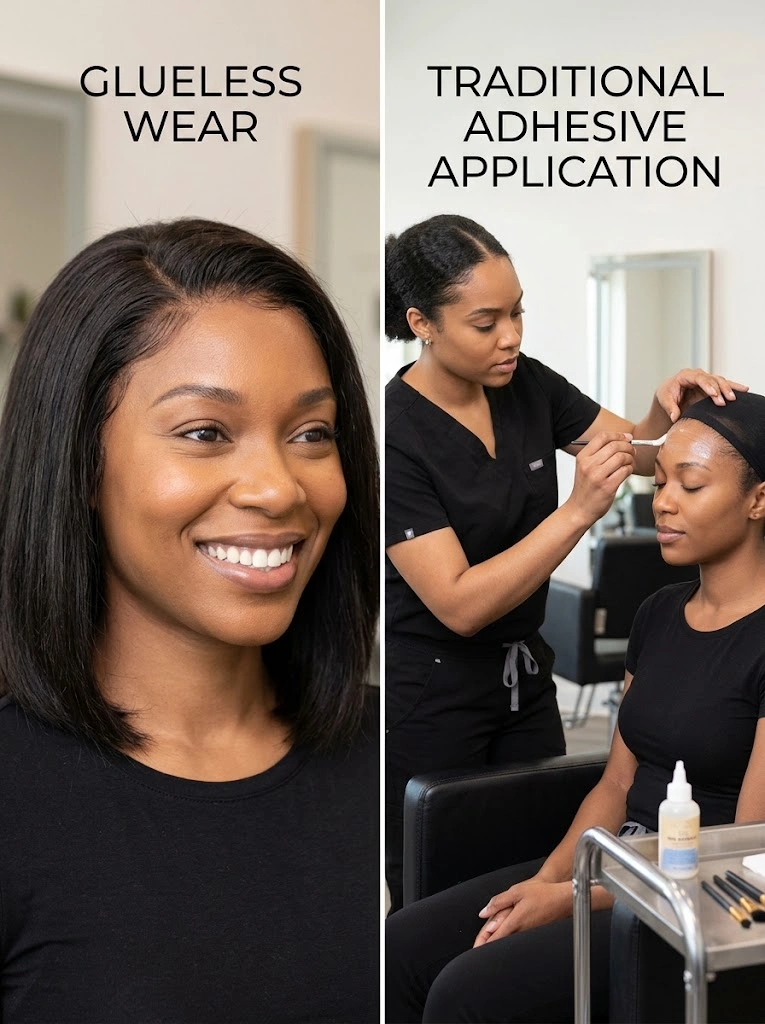
A glueless design can reduce installation complexity, but “glueless” does not mean “universally secure.” Cap construction, head measurements, adjustment straps, combs, bands, and overall fit determine how well a particular unit stays in place.
Try this virtually if you want to compare:
Everyday straight styles
- Natural waves
- Shorter lengths Low-maintenance colors
Different hairline placements
Decision tip: If your priority is a quick, commute-ready routine, compare the cap construction and fit rather than selecting based on the word “glueless” alone.
What a Virtual Try-On Can—and Cannot—Tell You What It Can Help You Judge
A good virtual preview is useful for visual comparison:
-
Hairline placement General face-and-hairstyle balance
-
Texture
-
Length
-
Color direction
-
Apparent density
-
Parting style Overall styling preference
-
What It Cannot Prove Do not treat an AI image as a guarantee of:
-
Exact cap size
-
Secure fit Lace color under natural daylight
-
Lace durability
-
Adhesive performance
-
Scalp comfort
-
Heat retention
-
Weight
-
Shedding
-
Tangling
-
Real-life movement
-
Exact hair density AI Limitation Notice: Virtual try-on results are simulated visual estimates. Camera angle, facial positioning, lighting, hairline detection, and image processing can affect the result. Always verify physical measurements, cap construction, lace specifications, return terms, and care requirements before purchasing.
The Important Gap Between “Looks Right” and “Wears Right”
A beginner previews a long HD lace wig and likes the result immediately. In the virtual image, the hairline appears seamless and the density looks flattering. The physical wig arrives, but the lace looks noticeably darker in direct daylight, the cap feels loose after a few hours, and the extra length requires more detangling than the buyer expected.
The virtual try-on did not “fail.” It answered the visual question correctly. The buyer simply asked it to answer physical questions it was never designed to answer.
That distinction is central to buying a lace front wig intelligently.
Use the Tool, Then Take the Next Step
Once a virtual preview identifies two or three styles you genuinely like, move from visual validation to physical verification.
, then check the cap measurements, lace specifications, and construction before making your final decision.
How to Use a Lace Front Wig Try-On More Accurately Step 1: Start With a Clear Photo
Use a front-facing photograph with your face unobstructed. Avoid extreme angles, heavy filters, sunglasses, or dramatic shadows.
The goal is not to create a perfect beauty photograph. It is to give the visual system enough information to place the hairstyle consistently.
Step 2: Try the Same Style in Several Constructions
Do not compare only different hairstyles.
Compare the construction:
13x4 → 13x6 → glueless → HD lace
This helps separate a preference for a hairstyle from a preference for a particular wig design.
Step 3: Test Hairline Placement
Look at where the virtual hairline begins relative to your forehead.
Ask:
Does the placement look balanced, or does it appear unusually low, high, straight, or dense?
This is often more useful than asking whether the wig simply “looks natural.”
Step 4: Change the Part
Try at least:
- Middle part
- Left side part
- Right side part
- Less-defined part If you prefer a deep part in every preview, that is a practical signal that a 13x6 construction may be worth investigating.
Step 5: Compare Density
Do not assume that more hair equals a more premium appearance.
For everyday wear, excessive density can add bulk, weight, heat, and styling work. A virtual preview can help you identify whether a fuller unit actually improves the look you want.
Step 6: Stop at the Decision Point
The purpose of virtual try-on is risk reduction, not endless scrolling.
Once you have identified:
Your preferred hairline
Your preferred texture
Your preferred parting
Your preferred cap construction
move to physical product verification.
Decision Block: Which Lace Front Wig Should You Try First?
IF YOU ARE A BEGINNER: Start by comparing a 13x4 glueless lace front. It offers a useful balance between a natural-looking front and manageable styling flexibility.
IF YOU WANT DEEPER PARTING: Compare a 13x6 lace front before paying for a more extensive lace construction.
IF YOUR TOP PRIORITY IS A DELICATE-LOOKING HAIRLINE: Compare HD lace, but verify the lace tone, density, construction, and real customer images rather than relying on the HD label.
IF YOUR TOP PRIORITY IS SPEED: Focus on glueless, pre-cut construction and cap fit. The easiest-looking wig online is not necessarily the easiest wig to wear securely.
IF YOU CHANGE STYLES FREQUENTLY: Prioritize lace area and parting flexibility over a single attractive product photograph.
Ready to narrow your choices? , then use the cap-size and construction information to eliminate styles that do not fit your practical needs.
Who Should NOT Buy Based on a Virtual Try-On Alone?
A virtual preview is not enough if:
You need an exact cap-size prediction.
You are highly sensitive to wig weight or heat.
You need certainty about lace color in daylight.
You require a secure fit for an active lifestyle.
You plan to use adhesive and need to assess compatibility.
You are purchasing an expensive custom or human-hair unit.
The seller provides unclear measurements or return terms.
The product listing does not clearly identify its cap construction.
You need to know how the wig will behave after prolonged wear, washing, or repeated styling.
For these situations, use the try-on as one verification step, then check the physical specifications and seller policies before purchasing.
Real-Wearing Considerations Most Try-Ons Miss
A hairstyle can look excellent for a 10-second preview and still be wrong for your routine.
Commute and Daily Movement
If you walk, take public transportation, exercise, or spend long hours away from home, secure cap construction may matter more than maximum lace depth.
-
Heat and Humidity More hair and heavier construction can feel warmer. If you live in a hot or humid climate, compare lighter everyday constructions rather than choosing solely for maximum volume.
-
Morning Preparation A pre-cut glueless wig may reduce installation time compared with a unit that requires adhesive, lace customization, and repeated styling.
-
Maintenance Human hair and synthetic fibers have different styling and care characteristics. Before buying, consider how much washing, detangling, heat styling, and restyling you are realistically willing to do.
A recurring practical observation in buyer feedback is that installation quality and daily fit can matter as much as the lace label. Buyers evaluating glueless 13x6 units often focus on fit, density, comfort, and styling flexibility alongside the lace type. These reports are useful experience signals, but they are individual observations rather than controlled product tests and should not be treated as universal results.
For a beginner with a 30-minute morning commute, a moderately priced glueless lace front that takes a few minutes to secure may be a better practical choice than a more expensive HD lace unit that requires a detailed adhesive installation every morning. The latter may win the photo comparison while losing the daily-use comparison.
Experience Level: Everyday Buyer
The best wig is not necessarily the one with the most advanced specifications. It is the one whose construction you can comfortably maintain.
Lace Front Wig Try-On vs. Buying From Product Photos
| Decision Factor | Virtual Try-On | Product Photos |
|---|---|---|
| See style on your face | Strong advantage | Limited |
| Compare multiple hairlines | Strong advantage | Moderate |
| Evaluate texture direction | Useful | Useful |
| Verify exact cap fit | Cannot verify | Cannot verify |
| Verify real lace color | Limited | Limited |
| See seller's actual construction | No | Often yes |
| Assess real-world comfort | No | No |
| Check physical specifications | No | Yes, if listed |
| Best use | Visual decision-making | Physical product verification |
The strongest buying process uses both: virtual try-on to narrow your choices, followed by physical-specification checks to validate the purchase.
How to Judge a “Natural” Lace Front Hairline
Instead of looking for an unrealistically perfect hairline, examine several separate signals.
-
Hairline Density A very uniform, dense edge can look less natural than a softly graduated front.
-
Hairline Shape A hairline that follows your facial proportions will generally appear more integrated than one positioned purely according to the wig's default construction.
-
Lace Visibility Thin lace can help, but transparency depends on the lace material, color, skin tone, lighting, installation, and image quality.
-
Parting Transition The area where the part meets the hairline deserves particular attention. A convincing hairline with an obviously artificial part can still reduce realism.
-
Overall Proportion A hairstyle can be technically well-installed yet visually unbalanced if the length, volume, or hairline placement overwhelms the face.
Frequently Asked Questions
- What makes a lace front wig look natural?
A natural-looking result comes from the combination of lace, hairline design, density, lace color, cap fit, parting, and styling. The lace itself is only one component.
- Is HD lace better than regular lace?
Not automatically. HD lace is typically thinner and can offer a more discreet visual transition, but thinner lace can also require more careful handling. Your skin tone, installation method, lighting, and intended wear all matter.
- Is 13x4 or 13x6 better?
Neither is universally better.
Choose 13x4 when you want practical front styling and a simpler everyday option. Choose 13x6 when deeper front parting and additional styling flexibility are genuinely important to you.
- Can I try different parting styles virtually?
Yes. Comparing middle, side, and deeper-looking parts is one of the more useful applications of virtual wig try-on. However, the visual preview does not guarantee that the physical wig will provide the same parting range.
- Are lace front wigs suitable for beginners?
Some are. A glueless, pre-cut lace front can be a more approachable starting point than a construction requiring extensive customization or adhesive installation.
Beginners should still verify cap measurements, lace dimensions, adjustment features, and return policies before buying.
- Can an AI try-on tell me whether a wig will fit?
No. A virtual image can estimate the visual appearance but cannot accurately measure your head or guarantee cap security.
- Can a virtual try-on guarantee that the lace will be invisible?
No. Lace visibility changes with lace color, material, skin tone, lighting, installation, camera processing, and viewing distance. Treat the preview as a visual estimate rather than a physical guarantee.
- Should I choose human hair or synthetic hair based on the try-on?
Use the try-on to compare appearance first, then evaluate fiber or hair type separately.
Human hair may provide greater styling flexibility, while synthetic options can offer lower-maintenance styling depending on the fiber and construction. The right choice depends on your budget, routine, desired styling flexibility, and maintenance tolerance.
- How do I know if a lace front wig will suit my skin tone?
Start by using the try-on to compare the overall hair color and contrast against your complexion, but do not use the virtual image as proof of an exact lace match. In person, check the seller's lace-color description and, where possible, customer photos taken in natural light. Lighting and screen settings can substantially change how both hair color and lace appear.
- Can I customize the lace color after purchase?
Sometimes, but do not assume every wig can be safely customized. Lace tinting, foundation, knot treatment, and other alterations can change the appearance or durability of a unit and may affect return eligibility. If lace matching is a major concern, confirm the seller's construction and customization guidance before altering the wig.
Your Best Lace Front Wig May Be the One You Can Actually Live With
A virtual lace front wig try-on is most useful when you stop treating it as a simple “make me look good” filter and use it as a buying decision tool.
Start with the visual questions:
Which hairline suits me? Which texture feels like me? Do I prefer a 13x4 or 13x6 parting area? Does glueless construction fit my routine?
Then verify the physical questions:
Will the cap fit? Is the lace specification clear? What is the density? How much maintenance will it require? What happens if it does not work for me?
That combination—visual preview plus physical verification—is more reliable than choosing a lace front wig from a single model photograph.
Ready to Compare?
to preview different hairlines, textures, colors, and parting styles on your own photo.
Use the result to narrow your choices, then verify the actual wig specifications before you buy.
Privacy note: WigMirror's try-on experience is designed around consent and anonymous decision support. Raw uploaded images are not retained under the stated privacy governance for this experience.
🛡️ Affiliate Disclosure: WigMirror may earn a commission when readers purchase through qualifying links. This does not change the price you pay. Recommendations are intended to remain the same even if affiliate compensation were zero; product availability, prices, and specifications can change, so verify current details with the seller before purchasing. The FTC says affiliate relationships should be disclosed clearly and conspicuously, with disclosures placed close enough to recommendations or links that readers can understand the relationship.